stacy
stacy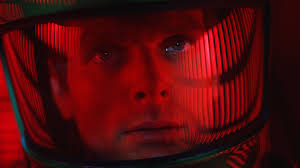 2001: A Space Odyssey, functions as prophetic rhetoric. It’s pretty amazing to watch this film in the year 2019 and recognize the sheer number of technological predictions that came to fruition that had to have been far-fetched in the year 1968. When this film was made, we had not even gone to the moon yet, however, Kubrick is able to capture the look and feel of the moon’s surface, anti-gravity atmosphere and space mission. Blakesley (2003) states that ‘film interpretation’ “treats film as a rhetorical situation involving the director, the film, and the viewer in the total act of making meaning. Its subject is often the reflexivity of interpretation, both as it is manifest on screen and in the reception by the audience/critic” (6). If we use this approach to evaluate 2001: A Space Odyssey, we must consider both what Kubrick intended as the meaning behind the film and how the audience receives it. My biggest question is did Kubrik’s film inspire some of the future technological advances or was he truly prophetic? In the year 1968, he showed us the first tablet (while Frank and David are watching BBC and eating..baby food?), Facetime (video conversation with his daughter-who was Kubrick’s youngest daughter-Vivian Kubrick) and Siri (HAL).
Kubrick uses a variety of special effects that had never been used before and he even hired spacecraft consultants as technical advisors on the film, which explains how he was able to capture space with so much accuracy (DeMet, 1999). He was able to create a futuristic look with scientific accuracy. Kubrick had a 30-ton rotating Ferris wheel and the set could rotate around them. This explains the fascinating views of the jogging track and waitress delivering food while walking upside down. Outside of these technical marvels, is the sheer genius of creating and imaging a future that is so scarily accurate. What I find the most fascinating is our obsession (still) with our Artificial Intelligence (AI) devices outsmarting us. In the film, we see that HAL read the lips of Frank and David when they were talking about dismantling HAL’s communication connections “always listening”. Compare this with the SimpliSafe commercial during the 2019 Super Bowl. In SimpliSafe’s ad “Fear is Everywhere”, the two men are having a conversation in the baseball stadium and one male says, “In five years, robots will be able to do your job, your job, your job…”. Then later, the AI device ominously promises his wife that it’s “always” listening (SimpliSafe, 2019). I find it astonishing that the themes in 2001: A Space Odyssey still exist today. Why have we always been afraid of robots/artificial intelligence? Why do we continue to create these artificially intelligent devices if we fear they will take over our jobs and lives? And how was Kubrick able to predict so many technological advances that were so ahead of his time? Did the rhetoric in Kubrick’s film influence the future of our technology or was he truly prophetic?
Blakesley, David. The Terministic Screen: Rhetorical Perspectives on Film, Southern Illinois University Press, 2003.
SimpliSafe. “Fear is Everywhere” Super Bowl Commercial – Extended Version. YouTube.February 3, 2019. Retrieved from https://www.youtube.com/watch?v=nPwVtpNs6eU
DeMet, George, D. (July, 1999). The Special Effects of 2001: A Space Odyssey. The 2001 Archive. Retrieved from https://2001archive.org/resources/the-special-effects-of-2001-a-space-odyssey/.
Kubrick, Stanley, director. 2001: A Space Odyssey. MGM, 1968.